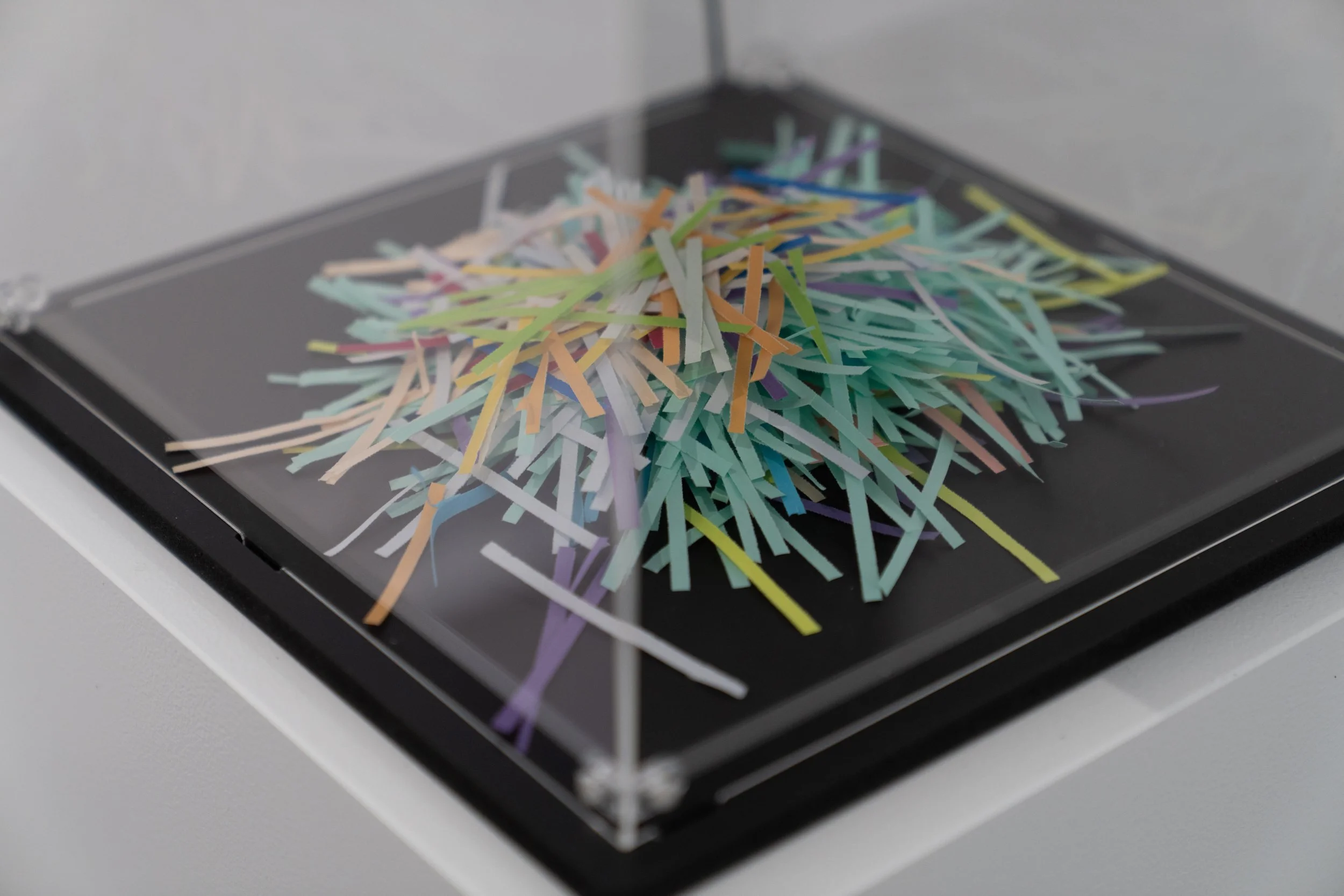
Forgetting Lamp
An interactive installation about letting go, memory, and release
Interactive ritual object for releasing memory
8 Week Project · Solo · 2025
Interaction Design · Physical Computing · Critical Design
A participatory object that transforms written memory into accumulated light.
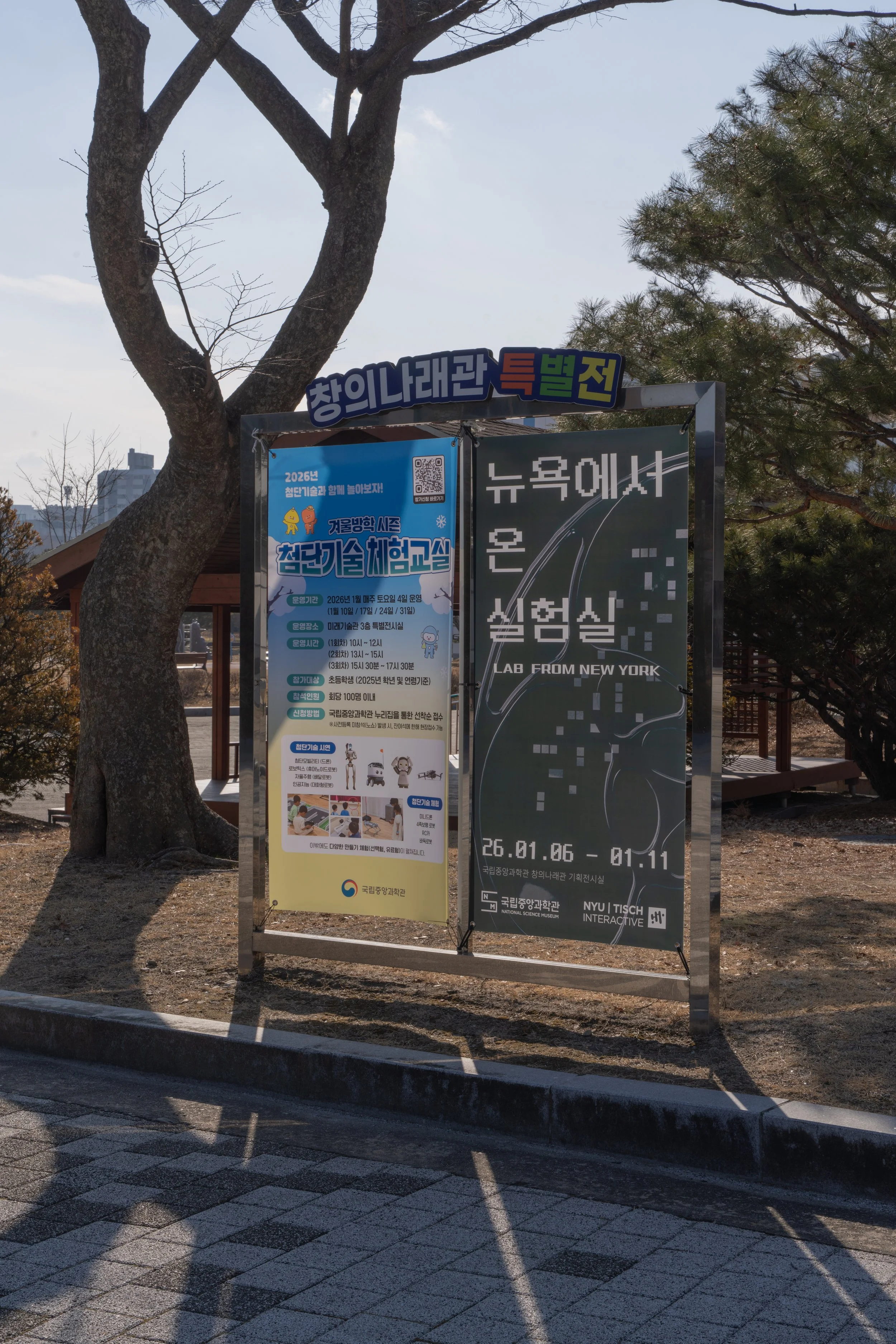
Exhibited in South Korea
PROJECT OVERVIEW
Forgetting Lamp is an interactive ritual object that explores the emotional tension between remembering and letting go.
In contemporary digital culture, systems are designed to preserve everything — messages, images, data, archives. Very few objects are designed to support intentional forgetting.
This project proposes an alternative:
a physical system that allows users to write down something they wish to release — and transform it into light.
Rather than storing memory, the lamp accumulates what has been destroyed.
The brighter it becomes, the more it has forgotten.
THE IDEA
Forgetting is often treated as failure — a loss of data, a broken archive, a missing record.
But emotionally, forgetting can be necessary.
Forgetting Lamp reframes destruction as transformation. It turns the act of shredding into a ritual, and the residue of memory into a luminous atmosphere.
The object asks:
Can forgetting be constructive?
What if erasure leaves a visible trace?
What if light is produced by what we choose to release?
INTERACTION FLOW
The interaction unfolds slowly and deliberately.
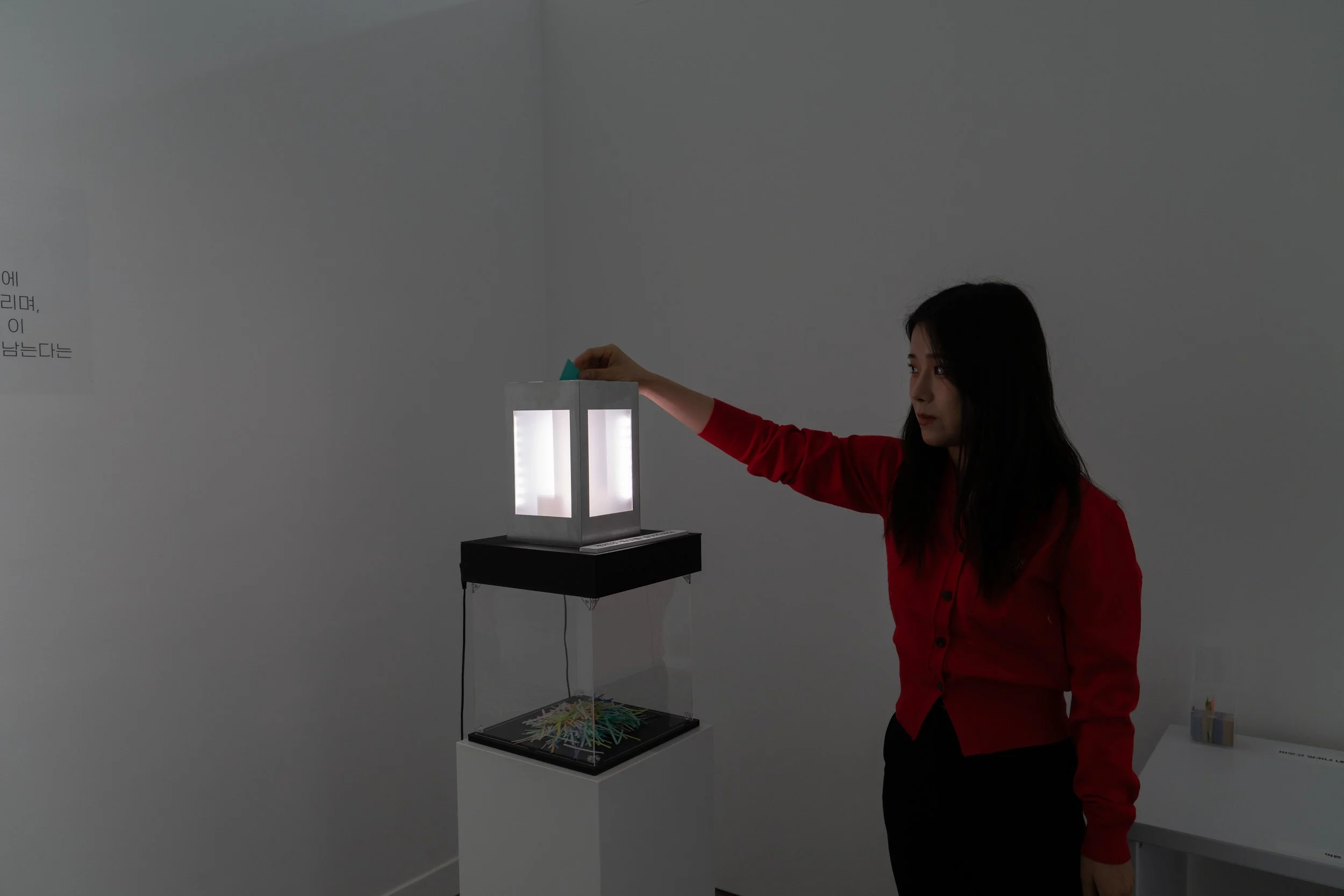
Step 1 — Writing
The user externalizes a thought, memory, or emotion.
Step 2 — Insertion
The note is fed into the lamp’s slot.
Step 3 — Transformation
A shredder mechanism destroys the paper.
Step 4 — Illumination
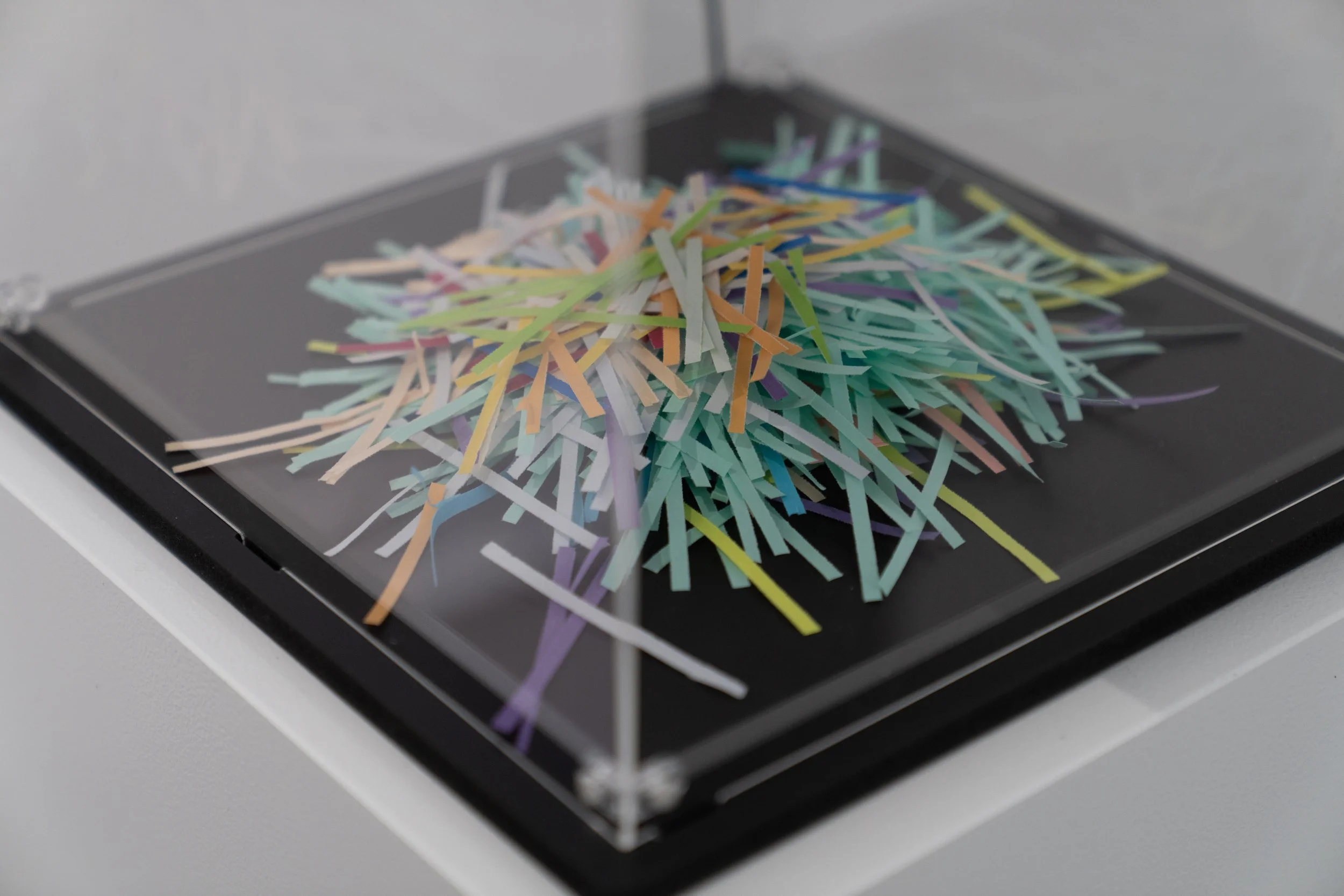
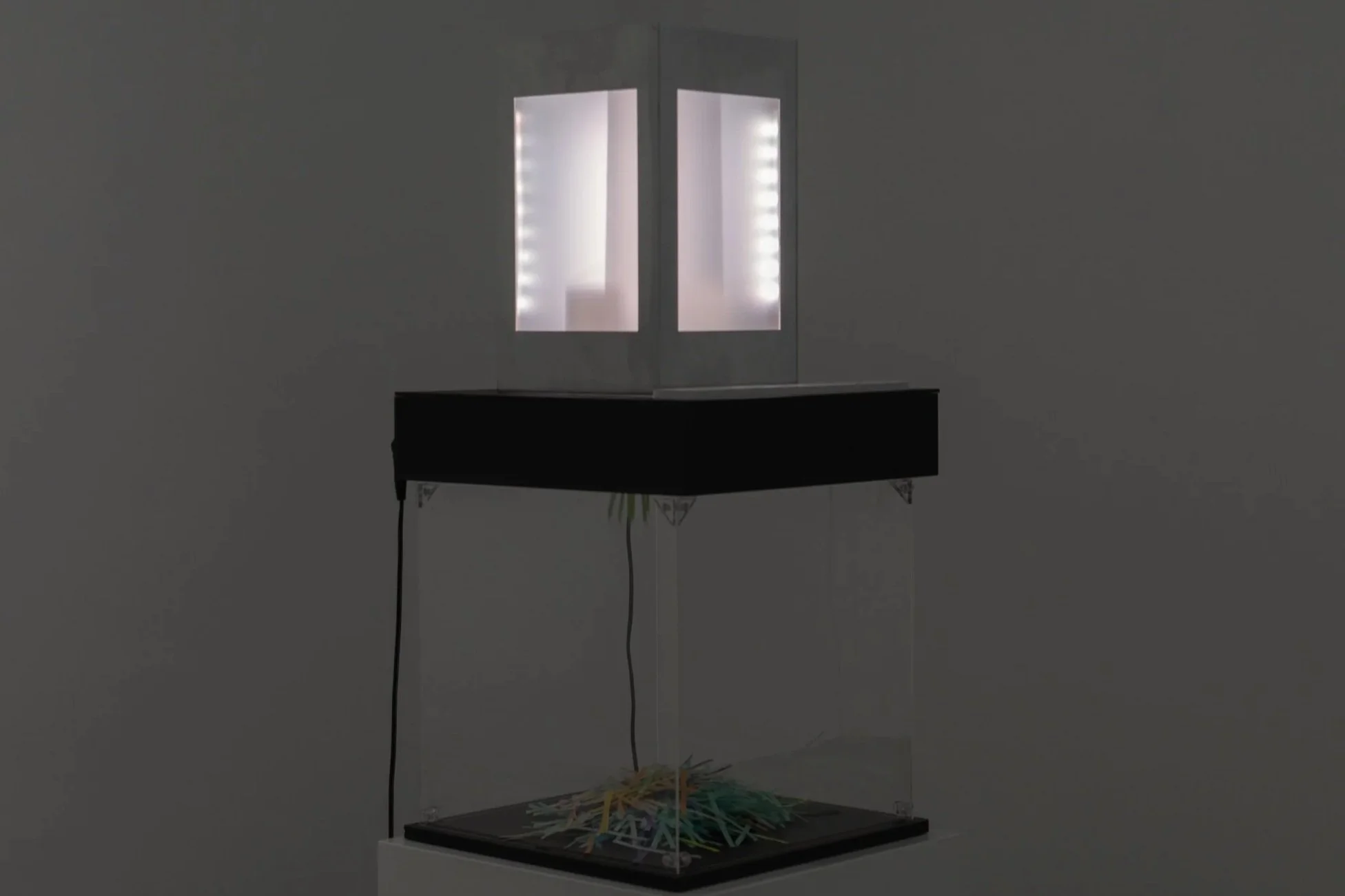
The shredded fragments collect inside an acrylic pedestal, softening and diffusing the internal light.
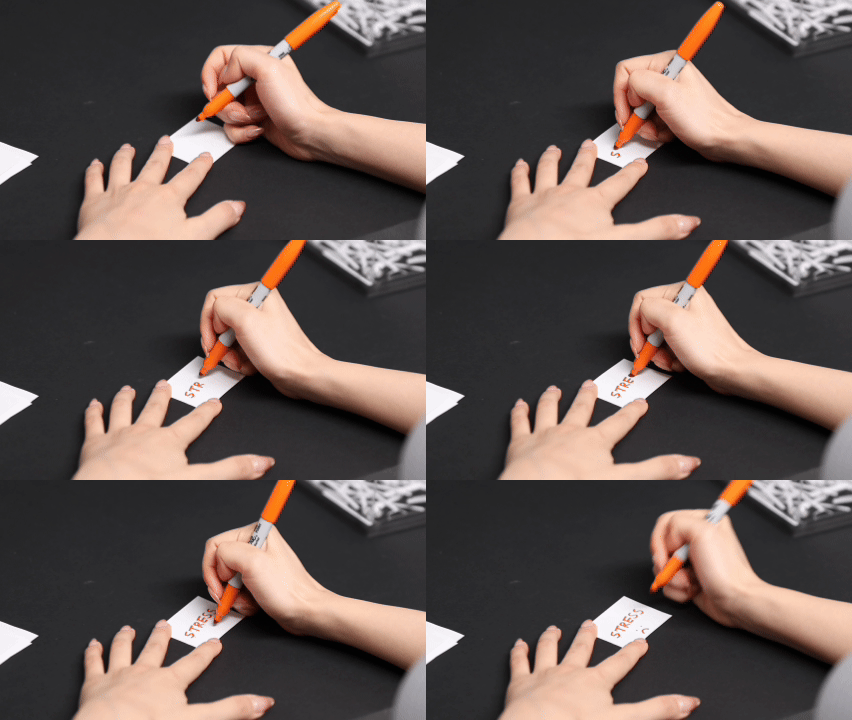
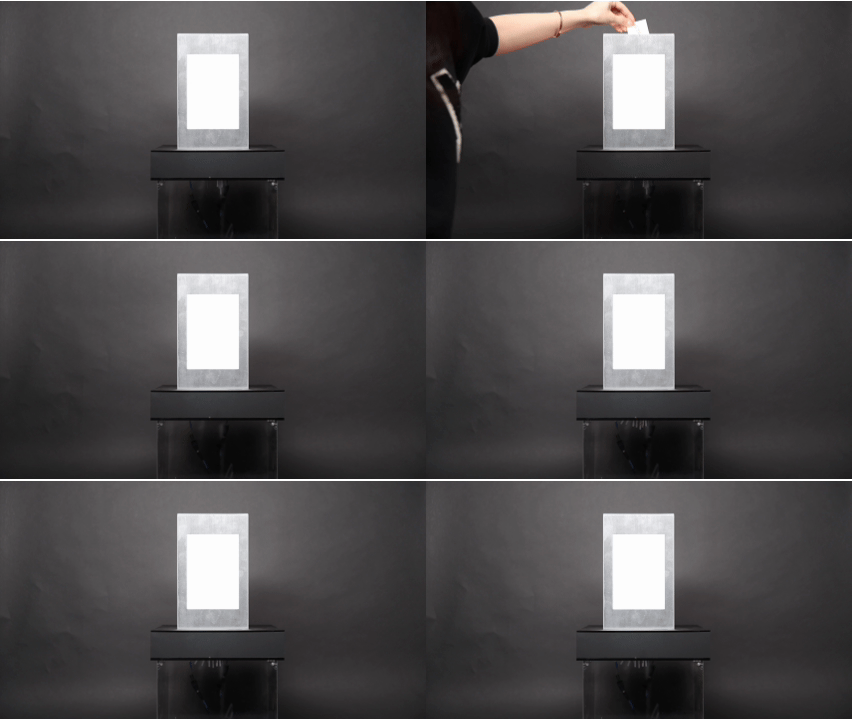
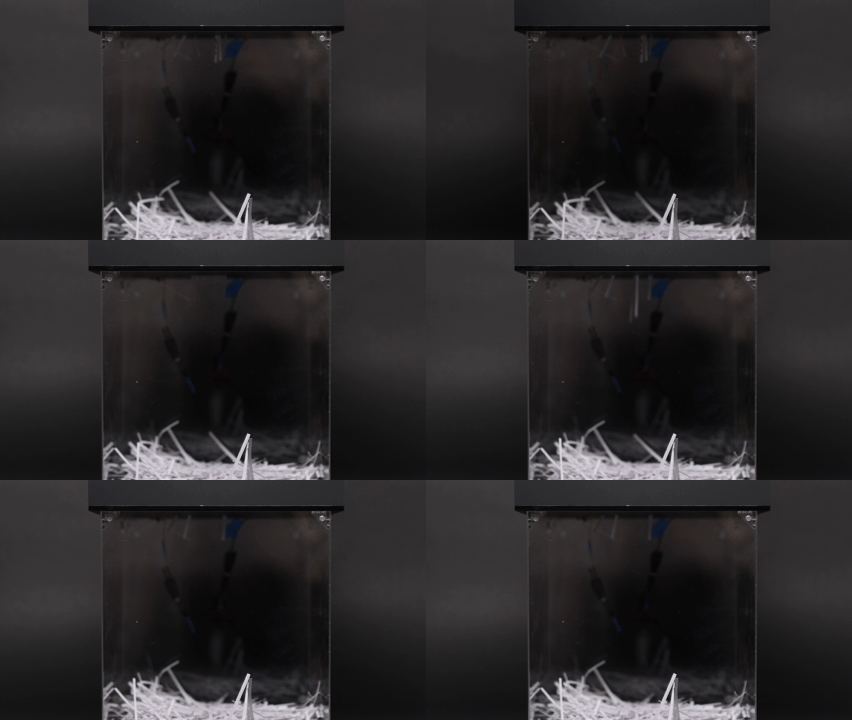
Over time, the pedestal fills with shredded pieces of erased text.
The lamp grows denser, warmer, and brighter.
The object shifts from a single-user interaction into a visible archive of collective release.
SYSTEM DESIGN
Input
Paper insertion
Activation trigger
Processing
Microcontroller-controlled shredder motor
Timed LED brightness modulation
Incremental intensity logic
Output
Mechanical shredding
Accumulated paper diffusion
Ambient light increase
Each shredding event slightly increases brightness, allowing the object to evolve visually over time.
The shredded paper is not discarded — it becomes the material that diffuses the light.
Memory becomes atmosphere.
MATERIAL STRATEGY
The object balances mechanical aggression and softness.
Transparent acrylic pedestal to reveal accumulation
Internal LED light chamber
Visible shredded fragments as emotional residue
The exposed interior contrasts the violence of shredding with the calm diffusion of light.
This tension is central to the project.
CONCEPTUAL FRAMEWORK
Forgetting Lamp operates at the intersection of:
Ritual object
Emotional interface
Archive system
Destruction device
It critiques the dominance of preservation in digital systems and proposes a physical counter-gesture.
Rather than deleting invisibly, the lamp accumulates absence visibly.
It demonstrates how interaction design can materialize psychological processes.
Engagement
People engage with Forgetting Lamp through quiet participation.

The project invites vulnerability without exposure, allowing individuals to perform a deeply personal act while remaining anonymous.

Within a public exhibition context, this contrast between intimacy and collectivity became one of the work’s core strengths. What begins as a private gesture gradually contributes to a shared atmosphere — transforming individual release into collective light.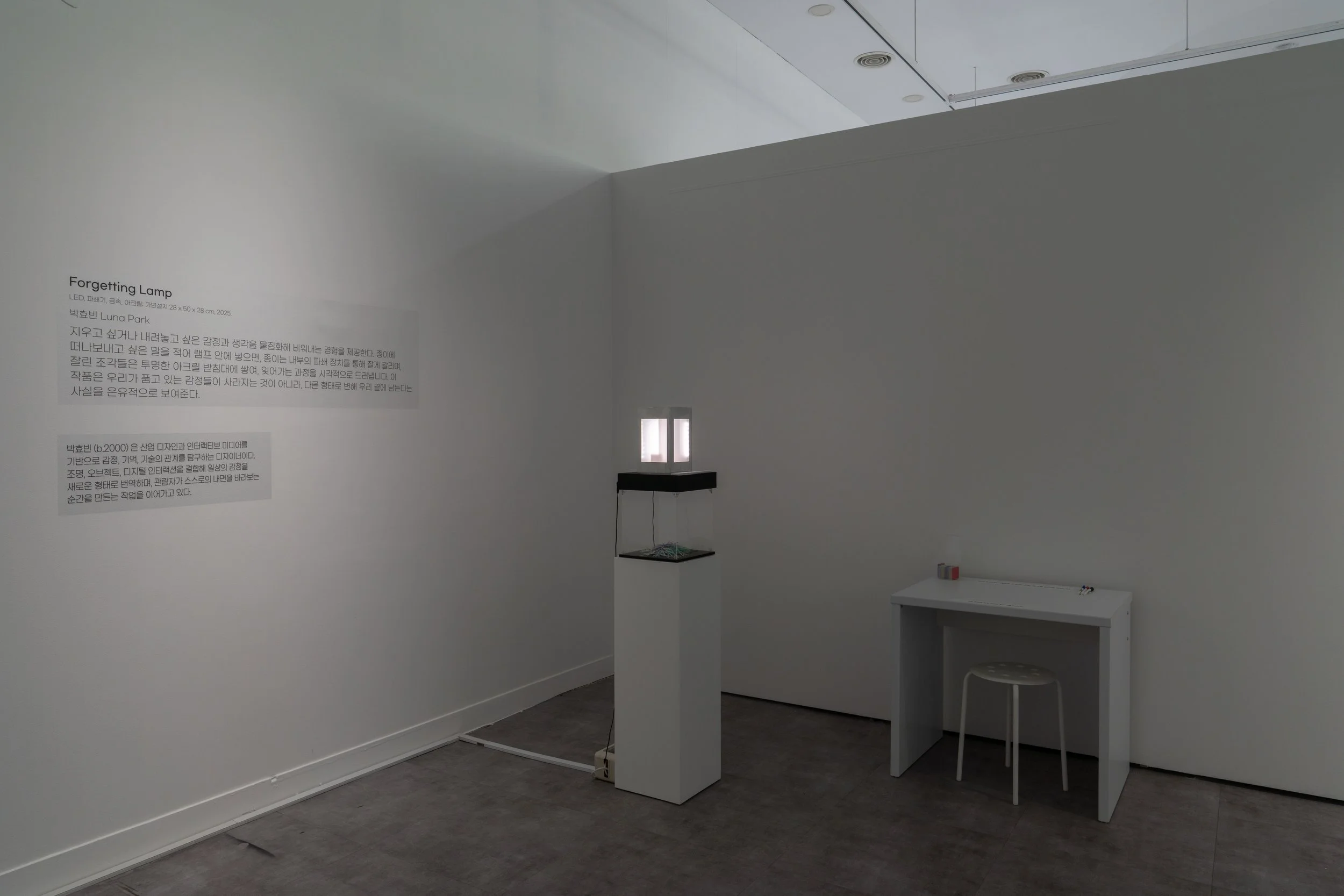
EXHIBITION CONTEXT (South Korea)
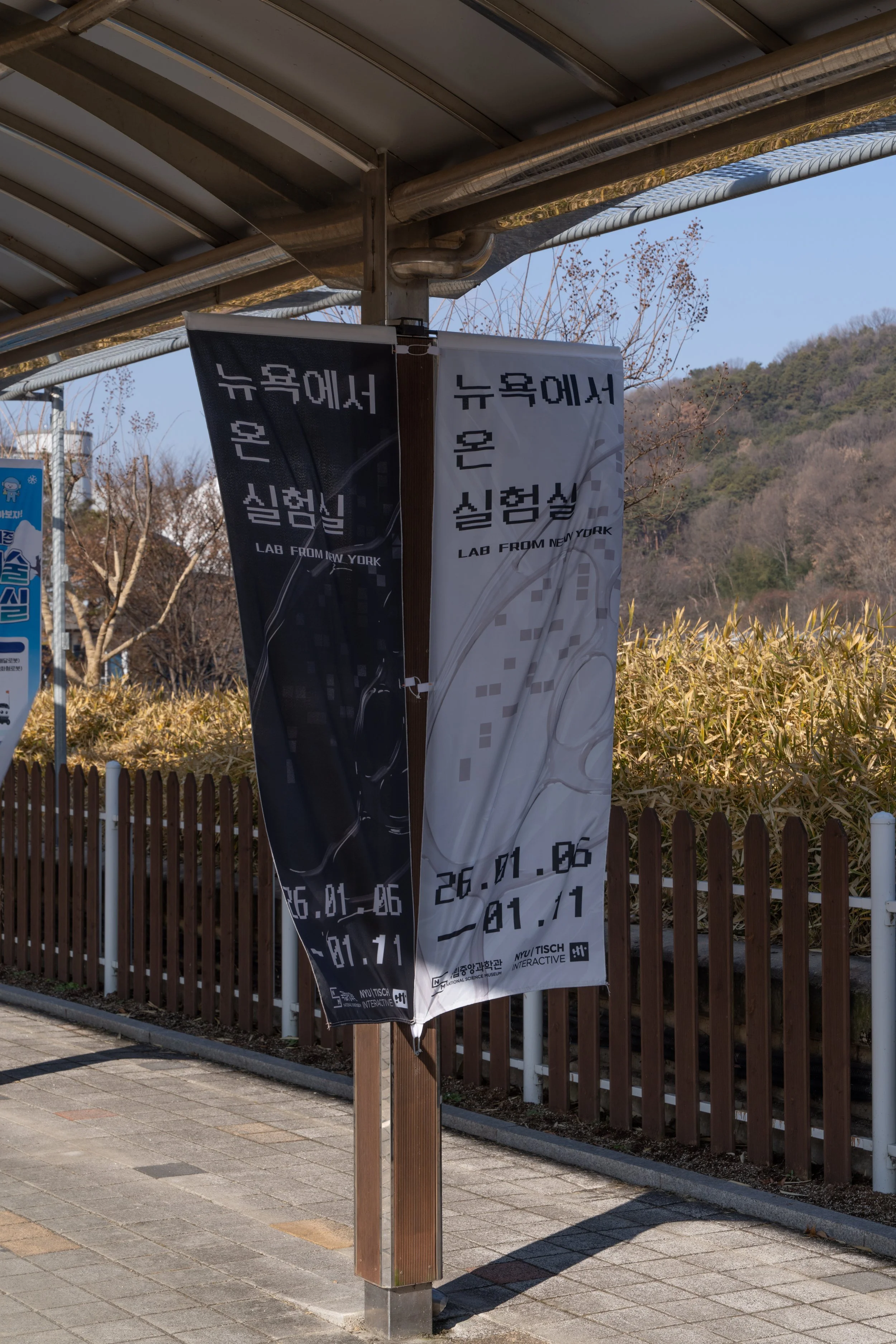
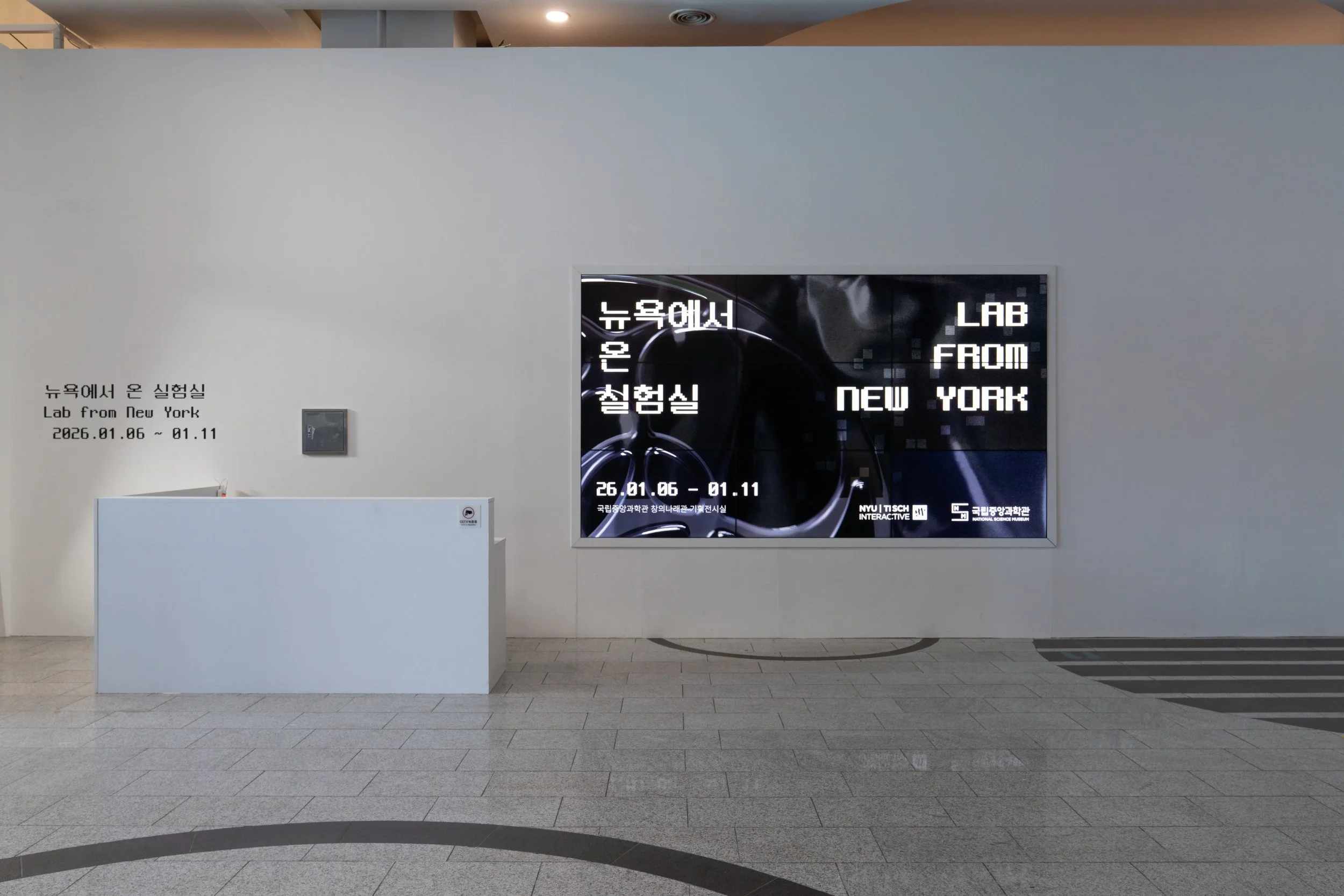
The project was exhibited in South Korea, where audiences engaged with the lamp as both a technological object and a symbolic ritual device.
During the exhibition:
Visitors paused before inserting their notes, often treating the act as meaningful rather than playful.
Some participants returned multiple times.
The growing accumulation of shredded paper visibly altered the atmosphere of the space.
The pedestal gradually filled over the course of the show, transforming the lamp into a collective container of private release.
In this context, the project moved beyond a prototype — it became a shared emotional environment.
The exhibition revealed how destruction, when ritualized, can feel constructive.
PRESS & MEDIA
Following its exhibition in South Korea, Forgetting Lamp was featured in multiple Korean media outlets. Coverage highlighted its participatory ritual design and its exploration of memory as transformation.
REFLECTION
This project strengthened my interest in designing systems that mediate emotional states rather than simply manage information.
It demonstrated that:
Interaction can be slow.
Destruction can be constructive.
Accumulation can represent absence.
Light can function as emotional feedback.
Forgetting Lamp became not just an object, but a system for collective release.
WE ARE NOT DELETING MEMORIES
WE ARE TRANSFORMING THEM
exhibition : Laboratory from New York @ National Science Museum at Korea. 2026
Designed by Luna Park. 2025