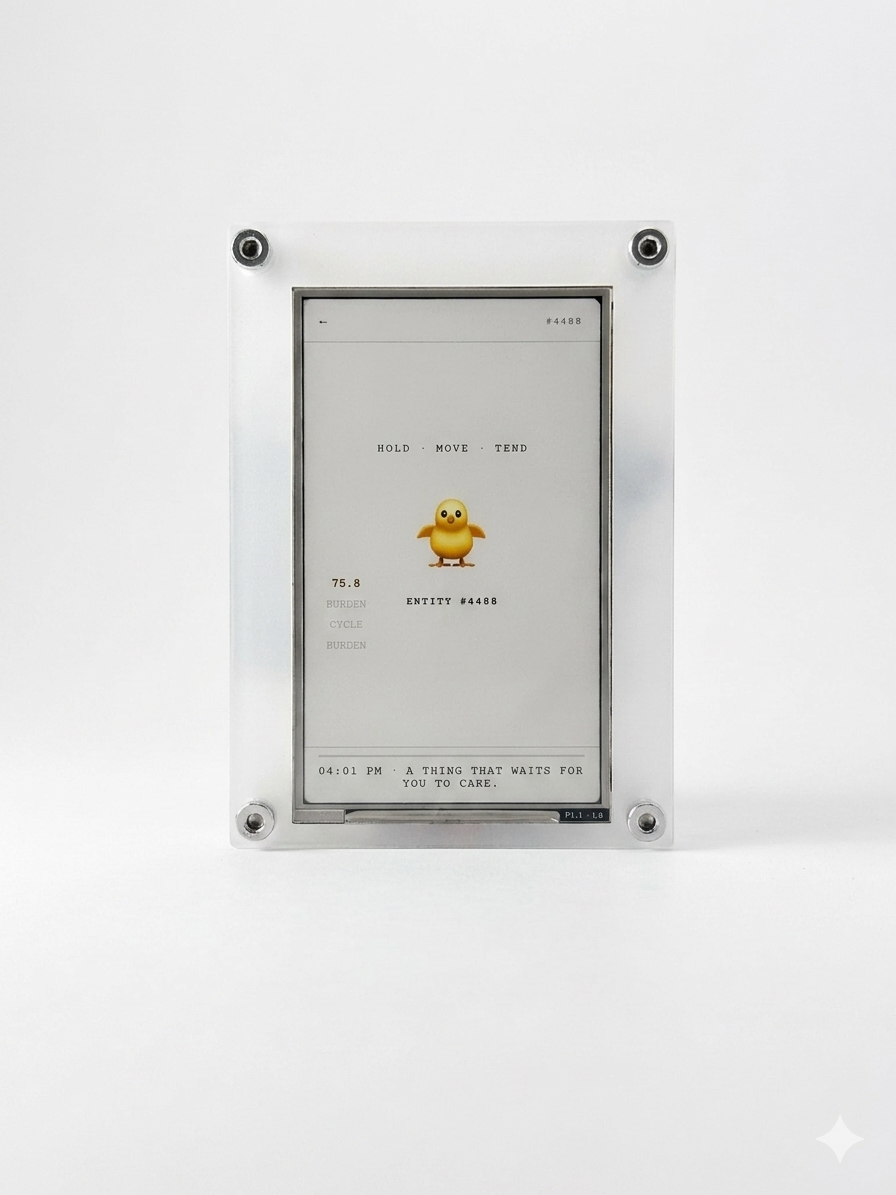
Please care
An interactive installation project about care labor
Interactive Care Simulation
3 Month Project · Solo · 2026
Interaction Design · Physical Computing · Critical Design
A game that translate emotional care into measurable units - where effort is continuously demanded but never sufficient
Thesis Project 2026
PROJECT OVERVIEW
Please CARE is an interactive care simulation that explores the emotional tension between feeling and measurement. In contemporary system : workplaces, institutions, digital platforms, care is increasingly quantified. Effort is logged. Presence is tracked. Output is evaluated. Yet care, by its nature, resists completion.
The more it is measured, the more invisible it becomes.
This project proposes an alternative frame:
A physical simulation that asks you to tend to something, and reveals how the system responds. Rather than rewarding care, the system accumulates debt.
The more you give, the more it demands.
THE IDEA
Care is often treated as something that should feel natural - effortless, instinctive, rewarding.
But structurally care is labor.
Please CARE reframes tending as a system. It turns the act of caring into a measurable output, and the accumulation of neglect into a visible presence.
The object asks:
What happens when care becomes a unit ?
What if effort is never enough by design ?
What if the system was never built to recognize what you gave ?
INTERACTION FLOW
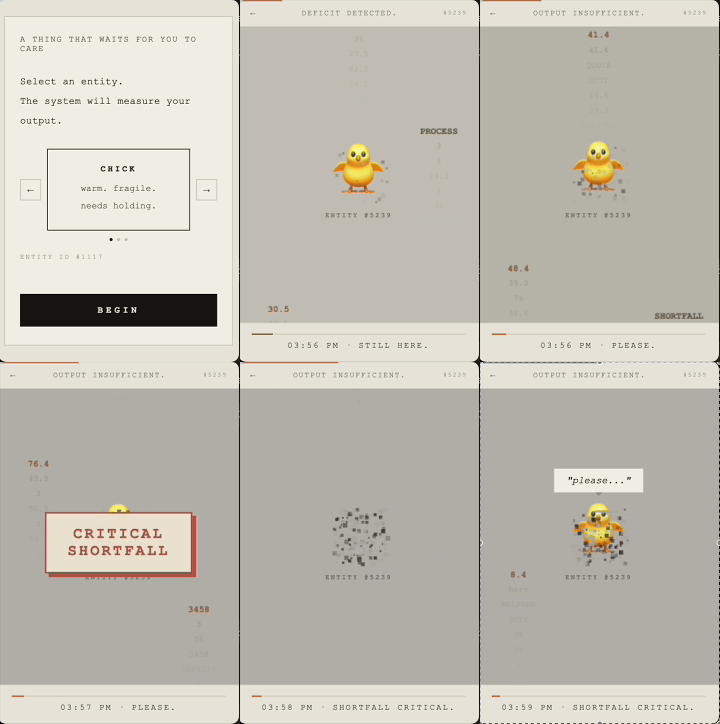
The interaction unfolds in real time, across a full day
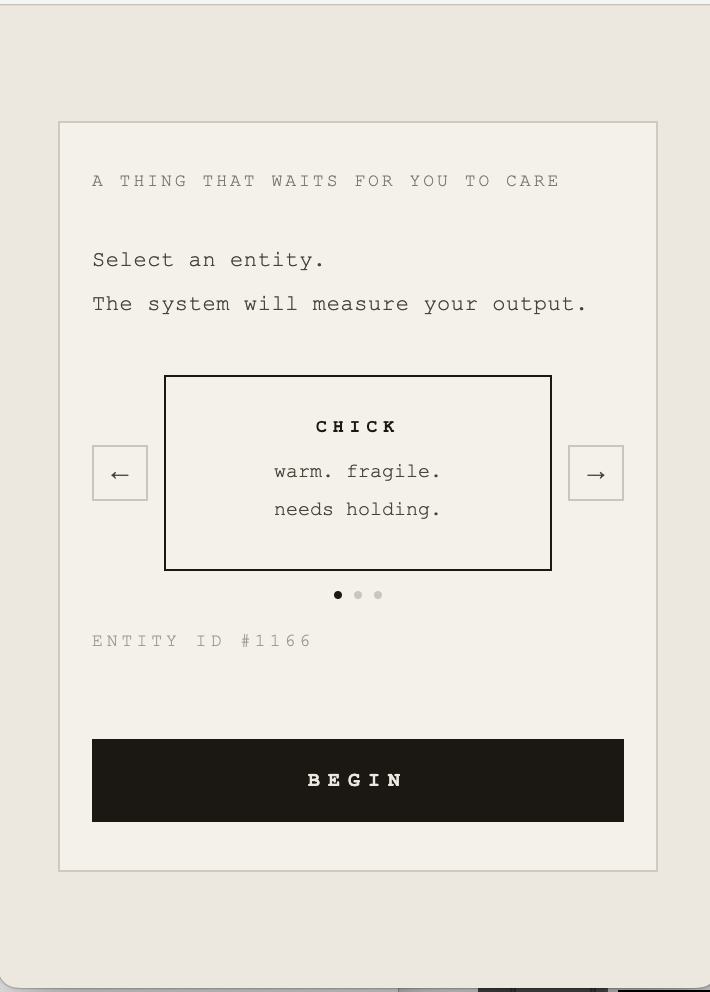
Step 1 — Selection
The user chooses an entity to care for: a chick, a plant, or a seed. Each one waits.
Step 2 — Tending
The user touches the screen. The system registers it as a care unit. The entity responds.
Step 3 — Absence
The user leaves, the debt accumulates. The entity is still there.
Step 4 — Return
The system logs what was missed. Last seen. Care deficit. The entity waited.
Step 5 — Decay
If care is insufficient, the entity changes. The system records it as output insufficient. The session ends. The object continues running.
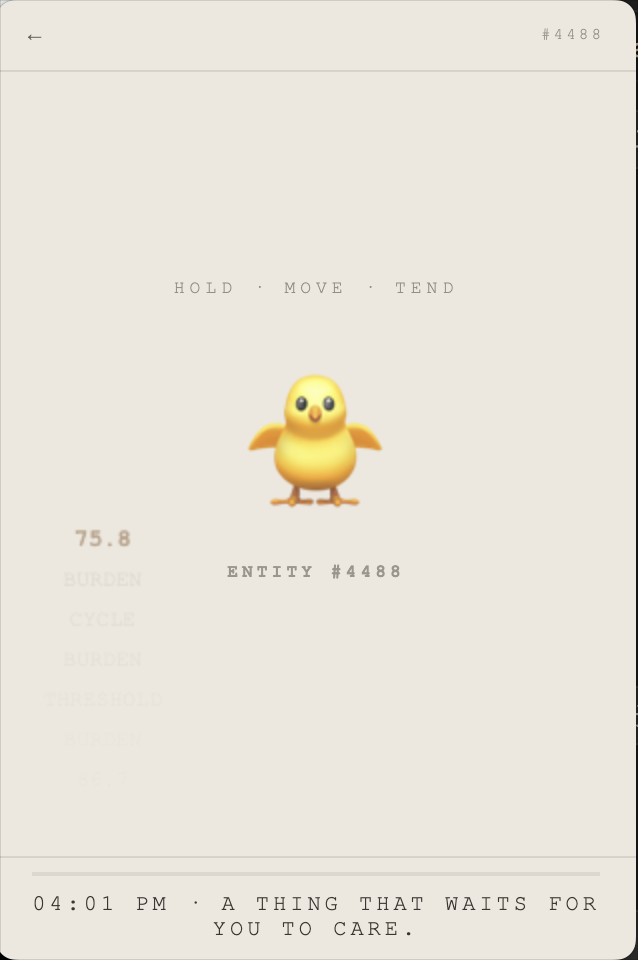
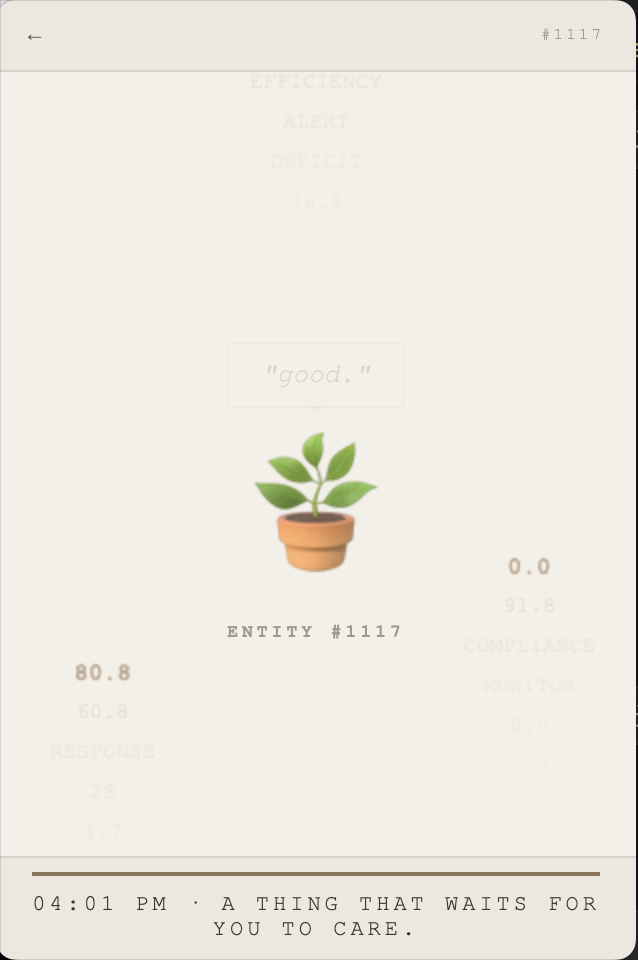
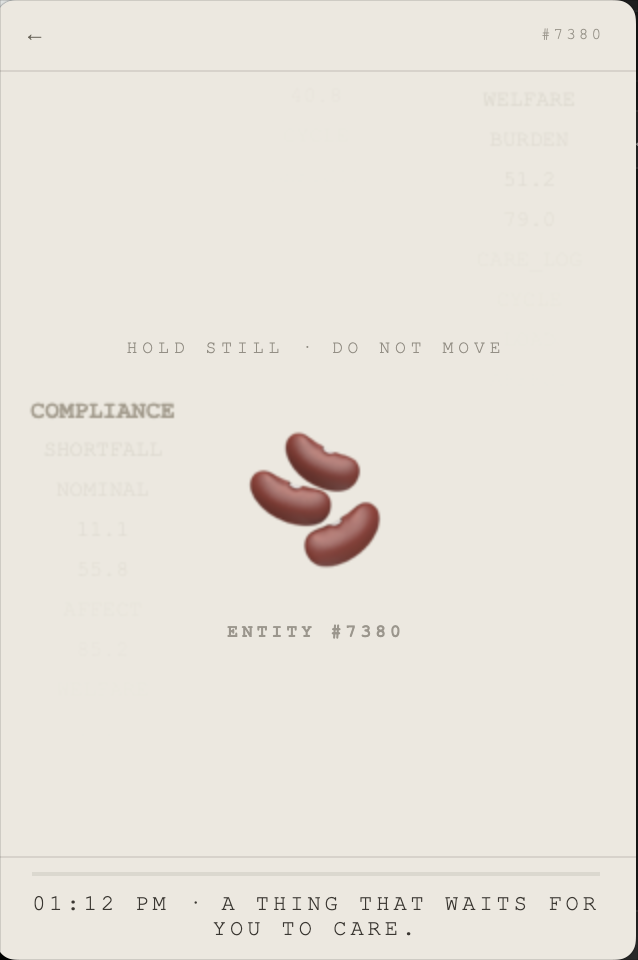
Over time, the entity accumulates debt that cannot be repaid.
The screen grows quieter. The numbers climb higher. The entity changes.
The object shifts from a responsive system into a record of absence - not what was given, but what wasn’t. A visible log of care that system deemed insufficient.
SYSTEM DESIGN
Input
Touch interaction on screen
User presence and absence
Processing
Real-time care debt calculation
Continuous state tracking - care count, decay rate, time elapsed
Entity state logic - idle, tending, decay
Output
Visual entity state change
System log generation
Care deficit accumulation
Each absence event increases the debt, allowing entity to deteriorate visibly over time.
The neglect is not hidden - it becomes the data that defines the session. Absence becomes record. Care becomes output.
Form
The object balances institutional coldness and fragility.
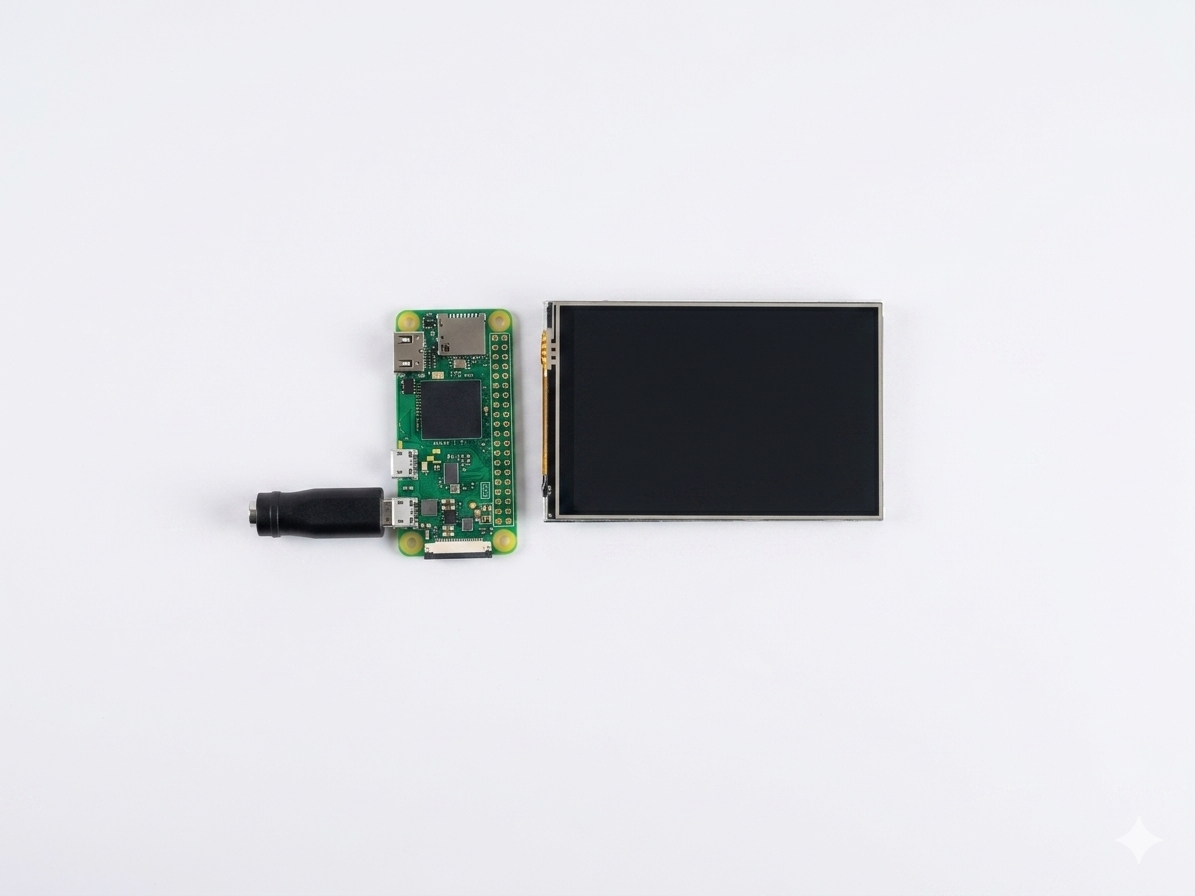
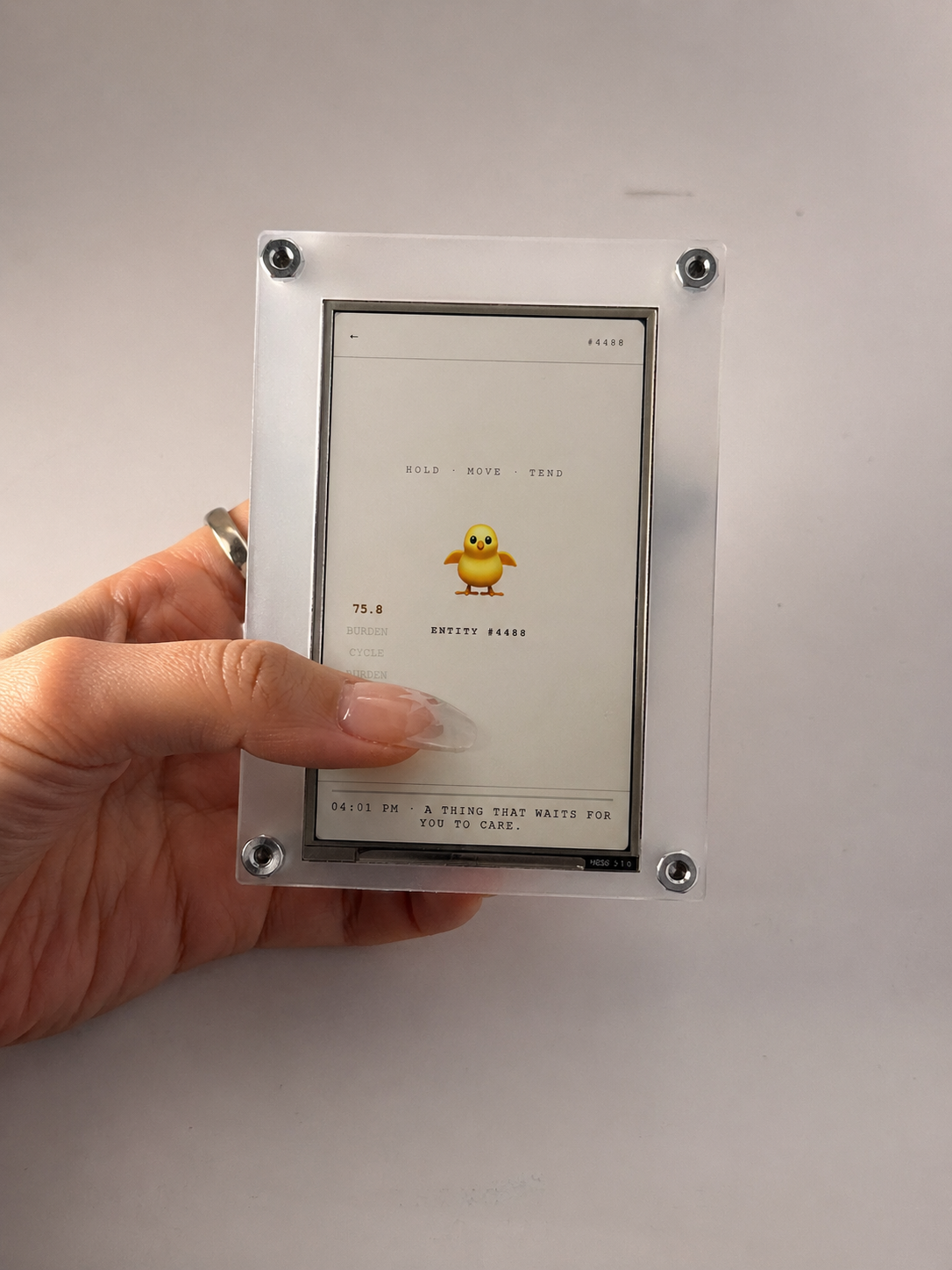
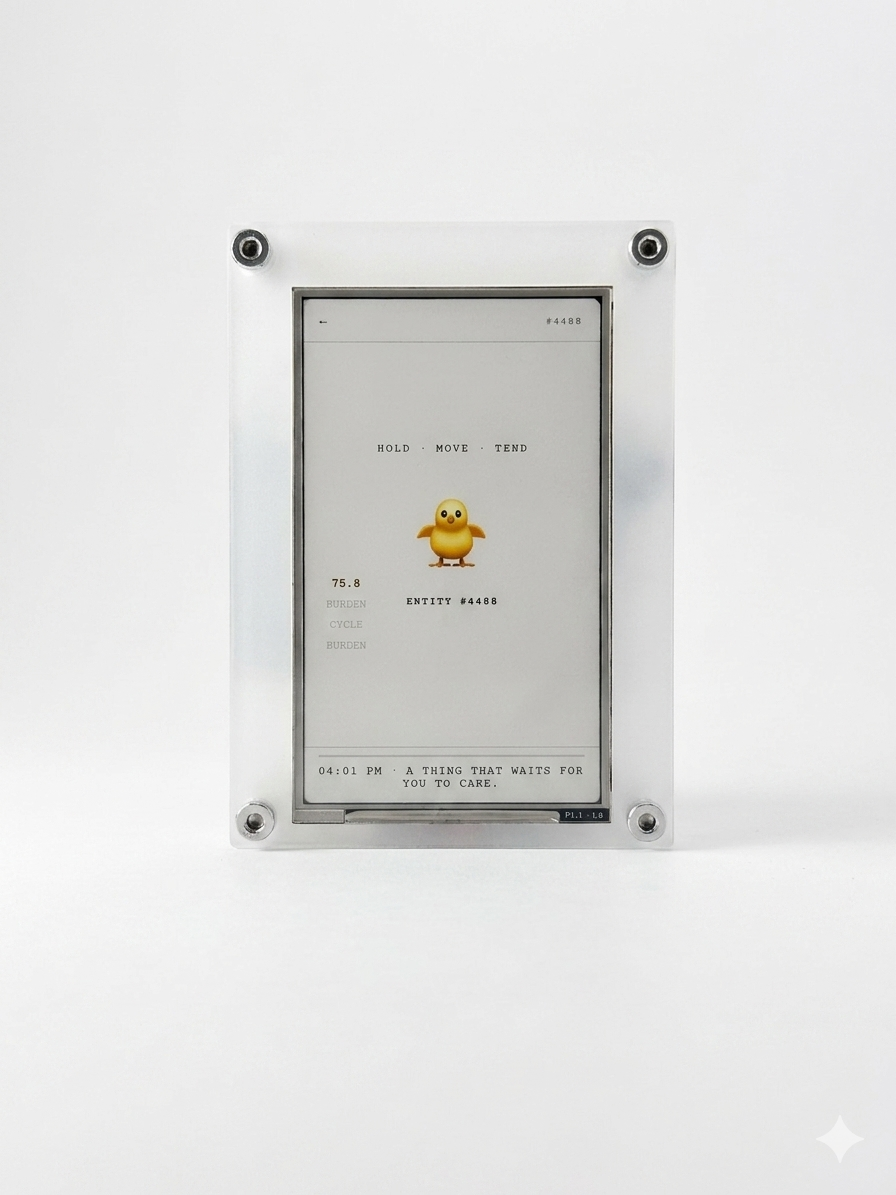
Acrylic frame - transparent, structural, exposed
3.5” touchscreen - always on, always visible
Raspberry Pi - hidden inside, running continuously
The screen shows everything the system tracks. Nothing is concealed. The logic is legible - care units, deficit, time elapsed.
This visibility is intentional. The system doesn’t hide what it demands. It just never stops demanding it.
CONCEPTUAL FRAMEWORK
Please CARE operates at the intersection of:
Care labor Theory
Emotional Interface
Measurement System
Physical Installation
It critiques the way systems quantify what cannot be quantified - and reveals the gap between what care feels like and what system recognize as care.
Rather than rewarding presence, the object accumulates absence visibly.
It demonstrates how interaction design can materialize structural conditions - making felt what is usually invisible.
USER TESTING
Please CARE was tested with 26 players via itch.io and through in-person sessions at school.
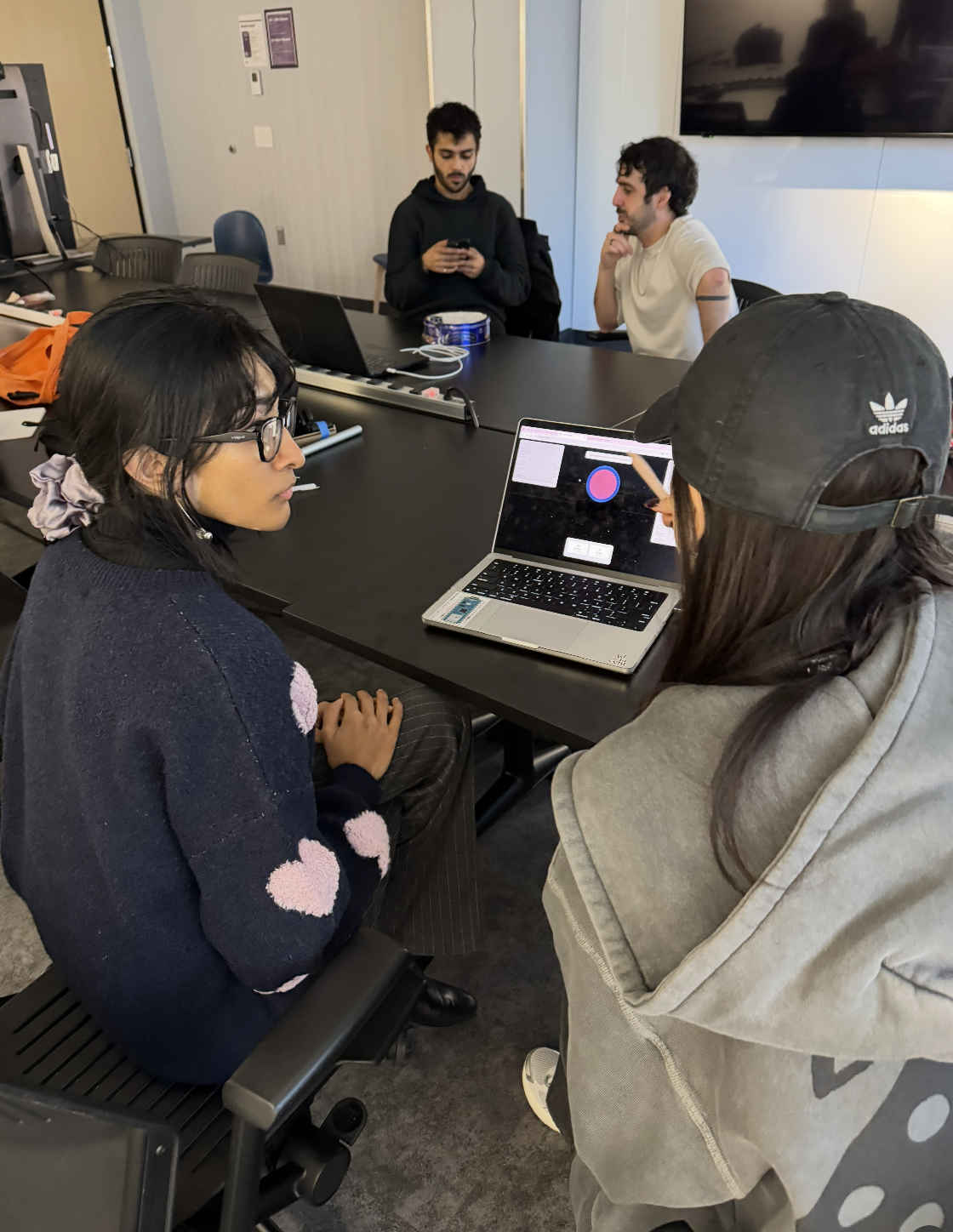
What they expected Most people approached the game expecting something rewarding - a pet to nurture, a clear goal, a satisfying ending. Several noted they expected something cute.
What they found The concept took a few attempts to understand. Most players realized what the game was doing not while playing
but at the end, when the system delivered its verdict.
What this revealed “Realized the concept after a few tries”
“The ending made it clear”
“Expected something cute”
“Didn’t feel attachment when it died”
What they said The gap between expectation and experience was intentional - butt the feedback confirmed it was working. Player weren’t confused by the system. They were unsettled by it. The absence of reward wasn’t design failure. It was the point
Engagement
People engage with Please CARE through sustained attention.The project invites presence without resolution - asking users to tend to something that cannot be completed, in a system that will never say it was enough.
Within a public exhibition context, this tension between care and measurement became one of the work’s core strengths. What begins as a personal interaction gradually reveals a structural condition - transforming individual effort into collective recognition of what care costs.
REFLECTION
This project deepened my interest in designing systems that make structural condition felt - rather than simply displaying information.
It demonstrated that:
Interaction can be demanding without being rewarding. Care can be present without being sufficient.
Absence can accumulate visibly. A number carry emotional weight.
Please CARE became not just a game, but a question - about what care means when it enters a system, and what gets lost in the translation.
WE ARE NOT PERFORMING CARE
WE ARE MEASURING IT
NYU ITP THESIS PROJECT 2026
Designed by Luna Park. 2026